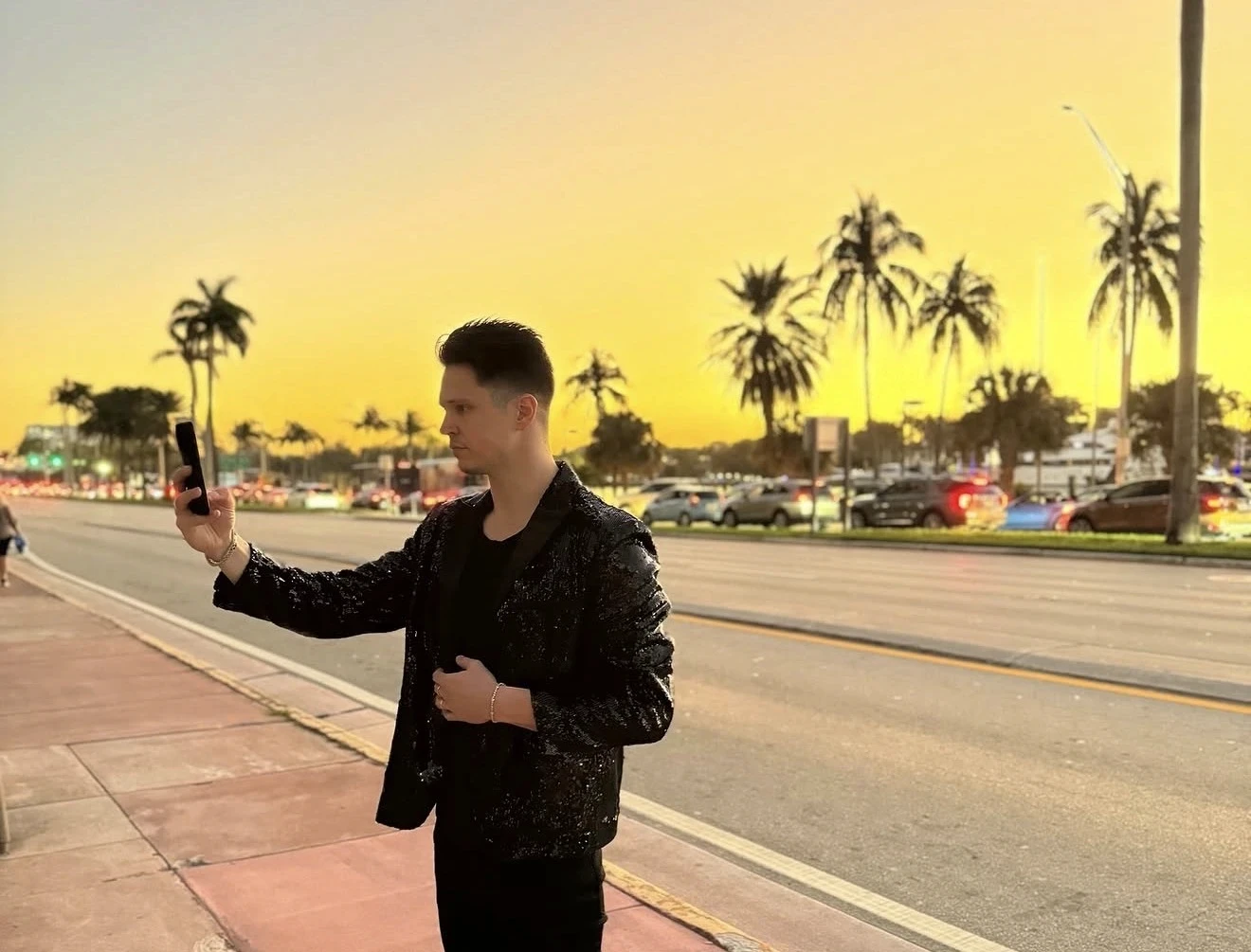

At 18, he was involved in the sale of a $20 million villa in Dubai, a transaction that placed him in a category of real estate where buyers, sellers and properties routinely operate at a scale far removed from the conventional residential market.
Yet the Dubai deal was not Nima’s first experience with selling.
Years before entering luxury real estate, he had already spent much of his adolescence experimenting with different forms of commerce. The products changed as he grew older, but the underlying process remained remarkably consistent: identify demand, understand the buyer and learn how to build enough trust to complete the transaction.
At 11, that meant flipping Fortnite accounts.
By 13, it meant sneakers.
Eventually, sneakers gave way to bags, watches and other high-value goods. What had started as a teenage side business selling to friends and family developed into an operation generating six figures in annual profit and supported by a team of 10.
The progression offers an unusual explanation for how someone so young became comfortable dealing with expensive property.
Before Nima learned how to sell homes, he had spent years learning how to sell.
An Early Education in Commerce
There was no formal business school behind Nima’s first ventures.
Instead, much of his education happened through transactions.
Selling sneakers introduced him to concepts that experienced entrepreneurs sometimes spend years refining: margins, inventory, customer acquisition, reputation and the difference between something being expensive and something actually being valuable to a buyer.
Luxury goods raised the stakes.
A customer buying an inexpensive product can tolerate some uncertainty. Someone spending thousands on a watch or designer item generally cannot.
Authenticity matters. Reputation matters. Presentation matters. Most importantly, trust matters.
As Nima moved toward higher-value transactions, he was inadvertently developing skills that would later become central to his work in luxury real estate.
The product might change from a watch to a villa, but the buyer still needs confidence in the person sitting across from them.
That became particularly relevant once Nima entered property.
Real Estate Was Already Close to Home
Real estate was not an entirely new world for Nima.
His father has worked in the industry since 1981 and, according to Nima, has completed more than $21 billion in property transactions over the course of his career.
That background gave Nima exposure to the industry long before he began pursuing transactions himself.
But having access to experience and being able to perform in the market are different things.
For a young agent entering luxury property, age can become an immediate obstacle. Buyers and sellers considering multimillion-dollar transactions tend to expect experience, established networks and evidence that the person advising them understands the consequences of the decisions being made.
Nima therefore faced a credibility problem that could not simply be solved by knowing the right people.
He needed a track record of his own.
His earlier businesses had already taught him one possible answer: start with relationships, understand what the customer actually wants and build credibility through execution.
Dubai would provide the first major test of that approach.
The $20 Million Dubai Villa
At 18, Nima completed one of the transactions that would begin defining his public profile: the sale of a Dubai villa valued at approximately $20 million.
The significance was not simply the size of the transaction.
Dubai has developed into an international center for luxury real estate, attracting wealthy buyers, entrepreneurs and investors from multiple regions. At the upper end of the market, agents compete not only on access to properties but on relationships, discretion, market knowledge and the ability to connect the right buyer with the right opportunity.
For an 18-year-old, operating credibly within that environment presented an unusual challenge.
The transaction demonstrated that Nima could move beyond selling comparatively smaller luxury assets and participate in negotiations involving property worth tens of millions of dollars.
It also reinforced something he had learned from years of selling other products.
Price does not remove the human element from a transaction.
It magnifies it.
The larger the purchase, the more important confidence in the people involved can become. Luxury real estate may revolve around architecture, location and investment potential, but transactions ultimately still happen between people.
For Nima, the ability to establish those relationships became part of the business.
From Dubai to a Global Property Network
Dubai is now only one component of Nima’s ambitions.
His real estate activities have expanded across markets including London, Dubai, Marbella and Monaco, placing his work within several of the locations most closely associated with international luxury property.
The geographical spread also reflects the nature of the customers operating at that level.
A high-net-worth buyer interested in Dubai may also own property in London. Someone selling in Marbella may be looking for an opportunity elsewhere in Europe or the Middle East.
Luxury real estate therefore becomes increasingly international as transaction values rise.
Nima has paired that approach with another asset he began developing years before entering property: his online identity.
He has documented his entrepreneurial activities online since he was 13.
That means his personal brand did not suddenly appear after a major property transaction. Followers have been able to observe the progression from sneakers and luxury goods to increasingly significant real estate deals.
In an industry traditionally built around referrals and private networks, that visibility represents a newer approach to reputation.
Social media can give a property professional an audience extending far beyond the city in which they are physically operating. A buyer in one country can discover an agent, follow their work and become familiar with their expertise long before the first conversation takes place.
For Nima, content therefore functions as more than marketing.
It is a public record of progression.
Building a Name Alongside the Business
Personal branding has become particularly important in luxury real estate because the individual professional can sometimes become as recognizable as the brokerage behind them.
Nima appears to understand that distinction.
Rather than presenting himself solely through available listings, his public identity combines property, entrepreneurship and the process of building businesses at a young age.
That creates a different relationship with an audience.
Someone following a traditional property account may arrive because they want to see homes. Someone following an individual can remain interested even when they are not immediately looking to purchase property.
Over time, that attention can translate into professional reach.
For someone working across London, Dubai, Marbella and Monaco, the ability to maintain relationships across borders can be particularly valuable.
It also explains why Nima’s ambitions are not limited to becoming a high-performing broker.
Beyond Brokerage
The longer-term objective is development.
For Nima, that would represent another significant transition.
Selling property requires understanding buyers, markets and negotiations. Developing property means participating much earlier in the value chain, from identifying opportunities and structuring capital to design, construction, positioning and eventually sales.
In other words, it means moving from selling the finished product to helping create it.
His current career can consequently be viewed as preparation for that next stage.
Every luxury transaction provides exposure to what sophisticated buyers value. Working across several markets offers insight into differences in architecture, location, amenities and investment preferences. Building relationships creates a network that could later include investors, developers and potential buyers.
The same pattern has appeared throughout Nima’s career so far.
Fortnite accounts introduced him to online commerce.
Sneakers introduced a more serious resale business.
Luxury goods introduced higher-value customers.
Real estate introduced transactions worth millions.
Development would raise the scale again.
A Career Still at the Beginning
It would be premature to describe Nima’s story as a completed success story.
That may be precisely what makes it interesting.
He is still at an age when most professional careers are only beginning. The $20 million Dubai villa, international property activity and businesses that came before it represent early chapters rather than a finished record.
His stated ambition is ultimately to establish himself as a significant name in global real estate and eventually build within the industry rather than exclusively transact within it.
Whether those ambitions materialize will depend on the same factors that shape any long-term career in property: execution, reputation, market cycles, relationships and the ability to adapt when conditions change.
But his path into the industry has already been unconventional.
An 11-year-old trading Fortnite accounts could hardly have known that the experience would form the first step toward negotiating luxury property seven years later.
Yet there is a recognizable thread connecting each stage.
Nima kept increasing the complexity of what he was selling.
He learned how buyers behave when more money is involved. He moved toward markets where trust becomes progressively more important. And rather than waiting until he had the conventional credentials associated with those markets, he entered them early and accumulated experience through participation.
The result is a career that has moved unusually quickly from digital goods to sneakers, luxury assets and multimillion-dollar international property.
For Nima CEO, the next challenge is no longer simply proving that someone his age can participate in luxury real estate.
It is determining how far he can take it.